
Monday, March 20, 2017
Visual literacy

Visual Literacy - The Thing I Didn't See But I See It Daily
There is this tree that sits at the bottom of the stairs in my basement, you can't miss it because it's always right there right in front of you. But I never paid much attention to it until now. This tree has literally been sitting here since fall of last year waiting to be placed outside when the weather breaks. I never paid much attention to it until now, I actually now see the creativity of the tree, the meaning, and importance of it. It was at this point that I'm able to analyze the details. For example how well the tree is woven together from the root to the branches. The fact that there is strength and endurance within the tree even though it's inside the house with little to no light daily. Each branch has different length which defines it's strength. It amazed me how important the branches are to each other. The stronger branches support the weaker branches. The weaker branches are growing which will continue to give life to the tree as when it is placed outside in the spring/summer.
Similar to Brian Kennedy's description in TEDxDartmouth. I was able to describe, analyze, and interpret,and contruct meaning just by really taking a look at the tree. Although it has been there all of the time it didn't have any meaning before now.
Yolanda M. Allen

Similar to Brian Kennedy's description in TEDxDartmouth. I was able to describe, analyze, and interpret,and contruct meaning just by really taking a look at the tree. Although it has been there all of the time it didn't have any meaning before now.
Yolanda M. Allen
Wednesday, May 11, 2016
Designs and Layouts
This class has really changed how I look at designs and layouts. Outside of school I don't really use a whole lot of upgraded technology so learning about the different types of designs and how to create a good layout now in this class will definitely help me for other class projects I may have.

In class we talked about CRAP - Contrast, Repetition, Alignment, and Proximity and how it is important to follow these guidelines to creating a good design and layout. The powerpoint in class showed us that designs should follow CRAP. Contrast which allows the elements to de different and the layout should be easy for the reader's eye to flow from one element to the next. Repetition is important in a layout because you want to repeat the element you are discussing to keep the poster organized and unified. Alignment will also add an appeal to your poster that will allow it to look neat and everything will flow together. Last, proximity in a poster helps because everything is close together in the design.

I get nervous when I am introduced to new technology such as Animoto, Tackk or Blog (I know what blogging is, but I had never blogged before) however, this class has been a great introduction to using all of these user-friendly technological tools. Animoto was so easy to use and the end result was a neat video with a lot of options for different designs and layouts. I am also glad that we talked about the one-space-only-after-a-period-comma-question mark-colon topic because I remember years ago that it was two spaces. It was a discussion that was also about the changes academia goes through as well. I had never heard of the Oxford comma, perhaps it's because I'm a returning student that has taken too long of a break from school. We also discussed fonts in layouts and in our textbook, the best font to use for a headline is the sans serif fonts (p.88). This font is thinner in width and plain so the letters are legible to the reader.
I'm sure that I will use what I learned in this class on other class projects, where I would probably have just used the familiar Powerpoint (not that there is anything wrong with this) and make a project or assignment unique or interesting.
This class has really changed how I look at designs and layouts. Outside of school I don't really use a whole lot of upgraded technology so learning about the different types of designs and how to create a good layout now in this class will definitely help me for other class projects I may have.

In class we talked about CRAP - Contrast, Repetition, Alignment, and Proximity and how it is important to follow these guidelines to creating a good design and layout. The powerpoint in class showed us that designs should follow CRAP. Contrast which allows the elements to de different and the layout should be easy for the reader's eye to flow from one element to the next. Repetition is important in a layout because you want to repeat the element you are discussing to keep the poster organized and unified. Alignment will also add an appeal to your poster that will allow it to look neat and everything will flow together. Last, proximity in a poster helps because everything is close together in the design.
I get nervous when I am introduced to new technology such as Animoto, Tackk or Blog (I know what blogging is, but I had never blogged before) however, this class has been a great introduction to using all of these user-friendly technological tools. Animoto was so easy to use and the end result was a neat video with a lot of options for different designs and layouts. I am also glad that we talked about the one-space-only-after-a-period-comma-question mark-colon topic because I remember years ago that it was two spaces. It was a discussion that was also about the changes academia goes through as well. I had never heard of the Oxford comma, perhaps it's because I'm a returning student that has taken too long of a break from school. We also discussed fonts in layouts and in our textbook, the best font to use for a headline is the sans serif fonts (p.88). This font is thinner in width and plain so the letters are legible to the reader.
I'm sure that I will use what I learned in this class on other class projects, where I would probably have just used the familiar Powerpoint (not that there is anything wrong with this) and make a project or assignment unique or interesting.
Monday, May 2, 2016
My Visual Literacy - Has it changed?
First of all, I have to say this class taught me so much! No double spacing after periods, the Oxford comma, the colors used for printing ( no pink?)... but mostly it has open my eyes to all the visual details that surround us everywhere. At work, I never noticed that our office space is so bland. A lot of color and some new pieces of furniture could fix that right up! I think it would be great to have warm colors in the summer/spring time and cool colors in the fall/winter to brighten up the office environment. Sometimes the smallest details in a office can add so much character to the room. I remember when I came back to Alverno after they had remodeled the commons area and it put a smile on my face. The walls were painted and there was new furniture to add to the renovation that they had done. It was a nice change and a really great incorporation of painting and colors.
 I found this before and after picture online showing how furniture, paint, and lighting can really change the look of a room. I don't have any pictures of my office work space, but it could definitely use the modern furniture and have that bright look the 'after' picture has. The lighting in the after picture is so much better and the remodeling of the fireplace has given the room a breath of fresh air.

So, yes, I have changed my perspective on visual literacy. In the beginning of this class when I watched Brian Kennedy TED talk I looked at the small colorful ball that he ask the audience to look at, and I didn't pay too much attention to it. But now, looking back, Kennedy said, " When you actually look at it you can begin to see it." (TED talk) I find that I am paying more attention to detail now than before for example, I didn't realize that I've bought cars that have mainly been black and not a color I really like. I like burgundy for a car and now for my next car, I want a burgundy color car. I also never thought about the colors I wear, or the color I like looking at, so now I think about how in our everyday lives we have visual details surrounding us all the time. I even started asking everyone I spoke to about the three color questions we answered in class. I did get a few odd stares from people because it's not something you think about.
Now on to art museums this summer to stop and enjoy the art pieces and put some of the art techniques/vocabulary I've learned to use.
First of all, I have to say this class taught me so much! No double spacing after periods, the Oxford comma, the colors used for printing ( no pink?)... but mostly it has open my eyes to all the visual details that surround us everywhere. At work, I never noticed that our office space is so bland. A lot of color and some new pieces of furniture could fix that right up! I think it would be great to have warm colors in the summer/spring time and cool colors in the fall/winter to brighten up the office environment. Sometimes the smallest details in a office can add so much character to the room. I remember when I came back to Alverno after they had remodeled the commons area and it put a smile on my face. The walls were painted and there was new furniture to add to the renovation that they had done. It was a nice change and a really great incorporation of painting and colors.
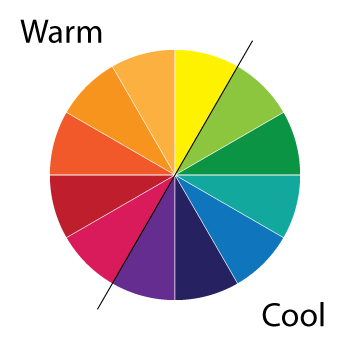

So, yes, I have changed my perspective on visual literacy. In the beginning of this class when I watched Brian Kennedy TED talk I looked at the small colorful ball that he ask the audience to look at, and I didn't pay too much attention to it. But now, looking back, Kennedy said, " When you actually look at it you can begin to see it." (TED talk) I find that I am paying more attention to detail now than before for example, I didn't realize that I've bought cars that have mainly been black and not a color I really like. I like burgundy for a car and now for my next car, I want a burgundy color car. I also never thought about the colors I wear, or the color I like looking at, so now I think about how in our everyday lives we have visual details surrounding us all the time. I even started asking everyone I spoke to about the three color questions we answered in class. I did get a few odd stares from people because it's not something you think about.
Now on to art museums this summer to stop and enjoy the art pieces and put some of the art techniques/vocabulary I've learned to use.
Monday, April 25, 2016
Color Survey
When I took the color survey, I found that I related the words to color. For expensive, I picked green since money is green and you need a lot of it for something expensive. For the word dependable, I chose dark grey since that is the color of my car and it has been very dependable. My favorite color is purple and/or lavender. When I was growing up I really liked the color blue and when I was comparing my survey results with the results of other people, I noticed that blue is a common favorite color. When I had to pick the color for happiness I thought about frozen yogurt and how the colors are so vibrant! So I picked berry red as my happy color.

 In class when Angelica Vasquez talked about the colors that were used when printing, I was surprised. I had no idea magenta was used! So that was something new for me to learn. In our textbook, I liked how Chapter 8 discussed the color wheel and the culture with color. (p.120) It was a nice refresher to talk about color and all the different ways to get new or unique colors from mixing them together. In the photo(s) above, I picked the lavender flowers to show my favorite color and as you can see there is a hint of blue in the flowers and in the yogurt all the blue from the berries adds so much flavor to the yogurt. So adding and mixing colors to get the perfect balance of colors works great. Well, for the most part. Some colors won't work with other colors.

Tuesday, April 19, 2016
Commercial Photography

Anything that has LOTS of colors and is creative in
commercial photography is something that will catch my attention. I especially find that facial and make-up
products use fruit and sometimes they make them appear “edible” in the
photos. I found this commercial photo
online which is showing lipsticks in the form of popsiscles and they have added
a “melting” appearance to give it a realistic comparison to ice cream. And all the warm spring colors they use are
so pretty. I don’t wear make-up, but
this photo makes me want to go out and buy some of these shades of lipsticks.

Another photo I found online was a facial cleanser that is
being placed into the water with raspberries surrounding the product. I have seen
many commercials with face cleansers that involve splashing water on the face,
but I assumed that in photography the water splashing was photo shopped since
it looks so perfect. All the water
droplets are in a perfect pose. I
learned from our guest speaker, Jim Wend that high resolution camera are being
used for those photo shots and that it takes a long time to get that perfect picture. Also, Jim explained that lighting is very
important. Lighting can drastically change the look of a product and during a
photo shoot it is important that the lighting is just right. Another photo I found was one with ice cream
and paint brushes. I’m not sure which of
the two they are trying to sell, but I wanted to buy both once I saw how well
the colors worked with the bright lighting in the picture.

Besides lighting, colors, and
using a creative approach to marketing these products in commercial photography
our textbook discusses the ethics of when you should and shouldn’t alter or
edit a photo. Any news or documentary
photos should stay true to the photo. “…strictly
adheres to the principles of truth, accuracy, fairness, and balance. Such principles are necessary to maintain
viewer trust that such images are factual and reality-based.” (p.144) This makes
complete sense that we know when to create a photo that will be used for
marketing to consumers and then when to keep the integrity of a photo for news
or photojournalism.
All in all, I found that I am
easily convinced to buy something based on marketing techniques as long as they
use warm colors, make water look “cool” and use the right lighting :)
Saturday, April 9, 2016
Animoto Video
I went through a lot of brainstorming for this assignment. I had so many ideas and my mind could not decide on one idea versus another. I had actually ‘settled’ on a topic, but then today, I changed my mind. I wanted to make my Animoto video on my journey as a returning college student. This past December, I graduated Alverno with an AA degree and I was invited to attend a rehearsal dinner and graduation. I contemplated whether I should go. After many people said, “Go! You’ve earned it.” I agreed. I showed up for the reheasal. I checked in and was given a sheet of all the graduating students’ names and was given a seat number. The names are arranged in alphabetical order (of course) and based on what type of BA degree you completed. My last name starts with a C, so I am familiar with being toward the beginning of lists. As I looked at the sheet of names I didn’t see mine and then I quickly realized that I wouldn’t be under the BA Degree list. I continued to look for my name and finally I saw it. There in black bold letters I read – Associate Degree and my name and one other girl’s name were listed. The rehearsal itself was absolutely wonderful. Everyone was so polite and friendly. When my name was called, I stood up and everyone clapped. It was really a special moment for me. But at the end of day, I knew I had to go back and get my BA degree because that was the degree I wanted to get from Alverno this whole time.
When I first started
school, I didn’t think about my anticipated graduation date. I knew it was going to be a lot longer than
the typical four year time frame, that I was used to hearing about. But that was okay, because I was a part time
student who worked a full time job, with a life outside of school. I decided I had to come back to school since Alverno informed me that they were
starting an online program and sunsetting the weekend program. This would be a good time to get back into
school. It doesn’t matter how long it takes a person to finish college or how
old you are. Don’t give up on your dreams: it’s a cheesy saying, but true. That
was how I finally decided to pick my Animoto topic.
Subscribe to:
Comments (Atom)